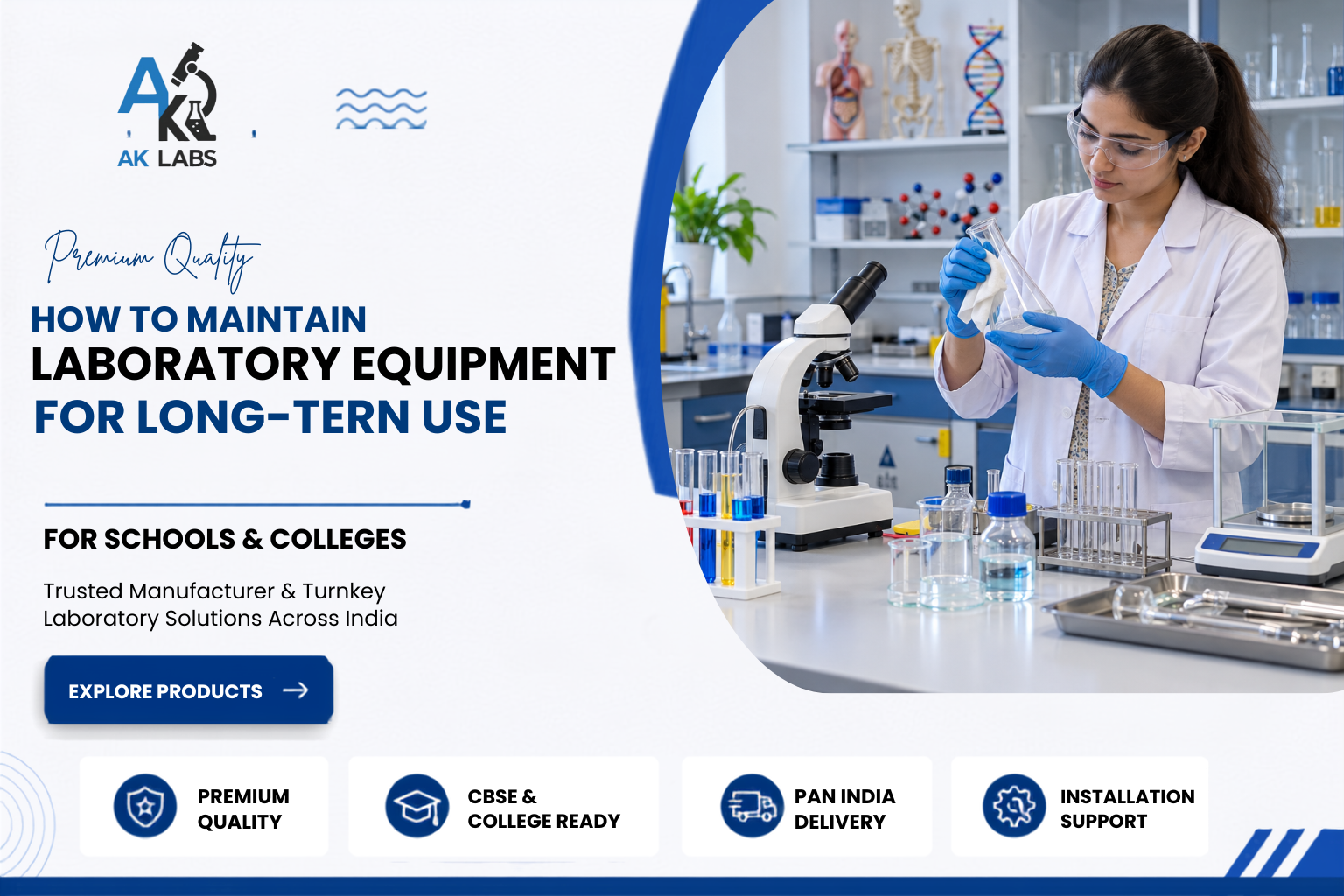
Learn how proper cleaning, storage, calibration, inspection, and handling can help maintain laboratory equipment, improve accuracy, extend equipment life, and support a safe laboratory environment.
Laboratory equipment is an important investment for schools, colleges, research institutions, and laboratories. From basic glassware and microscopes to balances, electrical instruments, and scientific models, each piece of equipment needs proper care to perform reliably.
Regular maintenance can help extend the useful life of laboratory equipment, maintain measurement accuracy, reduce unexpected breakdowns, and improve laboratory safety.
Whether you manage a school science laboratory or a professional laboratory, following a systematic maintenance routine can make a significant difference.
Here are some practical ways to maintain laboratory equipment for long-term use.
1. Clean Equipment After Every Use
Cleaning is one of the simplest and most important maintenance practices.
Laboratory equipment should be cleaned appropriately after use to prevent chemicals, dust, biological material, or other residues from accumulating.
For glassware such as beakers, test tubes, flasks, and measuring cylinders:
- Rinse equipment promptly after use.
- Use an appropriate cleaning solution when required.
- Remove chemical residues before they dry.
- Rinse thoroughly where appropriate.
- Allow equipment to dry completely before storage.
Always follow the manufacturer's cleaning instructions, particularly for instruments that contain electronic or sensitive components.
2. Handle Equipment Carefully
Improper handling can cause scratches, cracks, loose connections, or other damage.
Students and laboratory staff should be trained to:
- Carry glassware carefully.
- Use appropriate holders for hot equipment.
- Avoid dropping or dragging instruments.
- Handle precision instruments gently.
- Never force mechanical parts.
- Follow the operating instructions provided by the manufacturer.
Careful handling is especially important for microscopes, balances, electrical instruments, optical equipment, and precision measuring devices.
3. Store Equipment Properly
Proper storage protects laboratory equipment from dust, moisture, chemicals, and accidental damage.
Different types of equipment may require different storage conditions.
For example:
- Keep glassware in clean, secure cabinets.
- Store microscopes covered and protected from dust.
- Keep electrical instruments away from water and excessive moisture.
- Store chemicals according to their safety requirements.
- Keep small components together to prevent loss.
A well-organized laboratory also makes equipment easier to locate and reduces unnecessary handling.
4. Perform Regular Inspections
Do not wait until equipment stops working before checking it.
Regular visual inspections can help identify potential problems at an early stage.
Check for:
- Cracks or broken glass
- Damaged wires
- Loose connections
- Rust or corrosion
- Unusual sounds
- Damaged switches
- Worn-out components
- Signs of overheating
- Missing parts
Any damaged equipment should be removed from service until it has been properly assessed or repaired.
5. Calibrate Measuring Instruments
Calibration is particularly important for equipment used to make measurements.
Instruments such as balances, thermometers, measuring devices, pH meters, and other precision instruments may require periodic calibration according to their specifications and intended use.
Regular calibration helps ensure that measurements remain reliable and consistent.
The appropriate calibration interval depends on factors such as the instrument, frequency of use, operating conditions, and manufacturer's recommendations.
6. Follow Manufacturer Instructions
Every laboratory instrument is designed with specific operating and maintenance requirements.
Always refer to the manufacturer's manual for information about:
- Installation
- Cleaning
- Storage
- Calibration
- Operating conditions
- Maintenance intervals
- Replacement parts
- Safety precautions
Avoid using cleaning methods, chemicals, or maintenance procedures that are not recommended for the equipment.
7. Protect Equipment from Moisture and Dust
Dust and moisture can affect laboratory equipment, particularly electrical and optical instruments.
Laboratories should be kept clean, dry, and appropriately ventilated.
When equipment is not being used:
- Cover sensitive instruments.
- Keep equipment away from unnecessary water exposure.
- Clean dust regularly.
- Avoid storing equipment directly on damp surfaces.
- Follow specified environmental conditions where applicable.
8. Maintain Electrical Equipment Safely
Electrical laboratory equipment requires additional attention.
Before using electrical instruments, check:
- Power cables
- Plugs
- Switches
- Connections
- Insulation
- Signs of overheating
Never operate electrical equipment with damaged cables or exposed wiring.
Electrical maintenance and repairs should be performed by appropriately qualified personnel.
9. Keep a Maintenance Record
Maintaining a simple equipment log can make laboratory management much easier.
A maintenance record can include:
| Information | Example |
|---|---|
| Equipment Name | Digital Balance |
| Equipment ID | LAB-001 |
| Purchase Date | January 2026 |
| Last Maintenance | August 2026 |
| Calibration Date | August 2026 |
| Next Check | February 2027 |
| Condition | Good |
| Remarks | No issues |
Keeping these records helps laboratories track inspections, calibration, repairs, and replacement requirements.
10. Train Students and Laboratory Staff
Even high-quality laboratory equipment can be damaged through incorrect use.
Students and staff should understand:
- How equipment works
- How to operate it safely
- How to clean it
- How to store it
- What problems to report
- When equipment should not be used
Clear instructions and demonstrations can significantly reduce accidental damage.
11. Do Not Ignore Small Problems
A small issue can sometimes become a larger maintenance problem if it is ignored.
For example, a loose connection, unusual noise, cracked glassware, or inaccurate measurement should be reported promptly.
Early inspection and appropriate corrective action can help prevent further damage and unnecessary downtime.
12. Replace Worn or Damaged Parts
Not every piece of equipment needs to be replaced when one component becomes worn.
Where manufacturer-approved replacement parts are available, replacing the damaged component may restore the equipment to proper working condition.
However, repairs should only be performed by qualified personnel when required, particularly for electrical, precision, or specialized scientific equipment.
Laboratory Equipment Maintenance Checklist
A simple maintenance schedule can help schools and laboratories stay organized.
Daily
- Clean equipment after use.
- Return equipment to its designated storage area.
- Check for visible damage.
- Switch off electrical equipment after use.
Weekly
- Clean laboratory work areas.
- Inspect commonly used equipment.
- Check cables and connections.
- Organize equipment and accessories.
Monthly
- Inspect equipment more thoroughly.
- Check for corrosion or wear.
- Review maintenance records.
- Identify equipment requiring professional servicing.
Periodically
- Calibrate measuring instruments according to applicable requirements.
- Perform preventive maintenance.
- Replace damaged or worn components.
- Review whether equipment needs repair, upgrade, or replacement.
Why Is Laboratory Equipment Maintenance Important?
Proper maintenance provides several benefits:
- Longer equipment life
- Better measurement reliability
- Reduced repair costs
- Improved laboratory safety
- Less equipment downtime
- Better organization
- More efficient practical classes
For schools, maintaining equipment is particularly important because laboratory instruments may be used by many students throughout the academic year.
Conclusion
Laboratory equipment represents an important investment in practical science education. Proper cleaning, careful handling, appropriate storage, regular inspection, calibration, and staff training can help equipment remain reliable and useful for longer.
A good maintenance system is not only about repairing equipment when something goes wrong. It is about preventing problems before they occur.
By establishing regular maintenance routines and following manufacturer recommendations, schools, colleges, and laboratories can protect their equipment while creating a safer and more effective practical learning environment.
AK Labs provides scientific equipment, educational laboratory equipment, STEM learning models, and laboratory solutions for schools, colleges, and educational institutions.
Frequently Asked Questions (FAQs)
1. How often should laboratory equipment be cleaned?
Laboratory equipment should generally be cleaned after each use, using a cleaning method appropriate for the specific equipment and material. Some instruments may also require periodic deeper cleaning according to the manufacturer's instructions.
2. Why is regular laboratory equipment maintenance important?
Regular maintenance helps extend equipment life, maintain reliable performance, reduce unexpected failures, and support laboratory safety.
3. How should laboratory equipment be stored?
Equipment should be stored in a clean, dry, organized, and secure location appropriate for its type. Sensitive instruments should be protected from dust, moisture, chemicals, and accidental damage.
4. How often should laboratory equipment be calibrated?
Calibration frequency depends on the type of instrument, how frequently it is used, operating conditions, and manufacturer recommendations. Measuring instruments should be calibrated at appropriate intervals to maintain measurement reliability.
5. What should you do if laboratory equipment is damaged?
Stop using the damaged equipment and report it to the responsible laboratory staff. Equipment should be assessed and repaired or replaced as appropriate before being returned to service.
6. How can schools prevent students from damaging laboratory equipment?
Schools can reduce accidental damage by providing proper training, demonstrating correct equipment handling, providing clear instructions, and supervising practical activities when necessary.
7. What laboratory equipment requires regular calibration?
Equipment used for measurement may require calibration. Examples include balances, thermometers, pH meters, and various precision measuring instruments. The specific requirements depend on the equipment and its intended use.
8. Can proper maintenance reduce laboratory costs?
Yes. Preventive maintenance can help identify problems early, reduce avoidable damage, extend useful equipment life, and potentially reduce unexpected repair or replacement costs.
9. Should electrical laboratory equipment be repaired by students?
No. Electrical equipment requiring repair should be handled by appropriately qualified personnel. Students should report faults rather than attempting repairs themselves.
10. What is the best way to track laboratory equipment maintenance?
A maintenance register or digital record can be used to track equipment IDs, inspections, cleaning, calibration, repairs, service dates, and condition.